Surface finishing has evolved from a labor-intensive process to an engineering process that is precision-driven. In the current manufacturing environment the quality of coatings has a direct impact on durability, corrosion resistance, and overall perception of the product. As global standards get more strict and customers expect flawless coatings, a lot of facilities are turning to paint robotics for more control and uniformity.
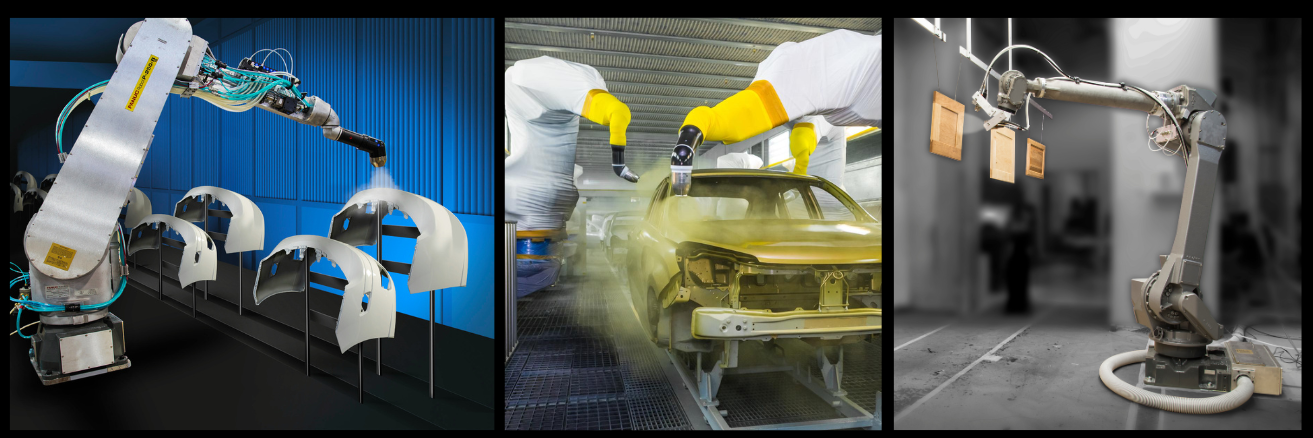
Image credit: automatedsolutions.com.au
A modern paint robot brings structured motion and programmable accuracy to applications that once depended on operator technique. Manufacturers eliminate inconsistencies such as uneven film formation or excessive use of materials by automating the paint path, speed and angles for application. This produces a coating process that is consistent and supports First Time Quality.
Consistency and efficiency are key to the measurement of outcomes
Due to fatigue or small differences in technique, manual painting can cause variation in coverage and thickness. Paint robots eliminate this variance by employing the exact motion patterns for every production cycle. This level of repeatability ensures a consistent finish across all components and optimized distribution of the materials.
A robotic paint system can also improve transfer efficiency. Overspray of paint can be diminished when the distance and direction between the applicator’s and component’s is kept in line. A reduced amount of material waste can lead to savings in costs while reducing emissions of volatile organic compounds aid in ensuring the environmental compliance.
Paint robotics that integrates fluid handling allows for the precise mixing ratios of coatings composed of several components. It eliminates inconsistencies that can compromise the integrity of the finish. The combination of stable flow control and adjustable parameters allows producers to fine tune the atomisation settings and patterns in real-time without interfering with production.
Productivity and safer working environments
The longer time between maintenance is a major advantage of using a paint robot system. Paint cells that are robotic are more efficient than manual operation because they run without interruption. Once they are programmed, they can ensure the same amount of work without interruptions or constant supervision.
It is crucial to think about the safety of any establishment that utilizes bi-component solvents or solvent-based coatings. Paint atomized may create hazardous conditions, particularly when working with substances that are flammable or reactant. The latest paint robots have been designed for safety in high-risk environments, helping reduce personnel exposure to harmful substances and raising safety standards in workplaces.
Conveyor tracking technology further strengthens productivity by enabling robotic paint application even when components are in motion. This technology increases the working space and makes sure that production lines operate efficiently.
Australian Automation Expertise Supporting Industry
It is vital that manufacturers are able to access automation partners that are skilled. In Australia, Automated Solutions has established a solid reputation for the provision of high-end robotic integration services. The team has extensive experience in automation engineering, and is certified as FANUC robotic integration experts. They aid businesses in the implementation of customized robotic paint solutions to the needs of their clients.
Automated Solutions helps manufacturers evaluate their processes, and create robotic paint cells by combining the expertise of industry experts with technical know-how. Through collaboration in scheduling, simulation, as well as system integration, factories gain an understanding of the expected performance enhancements prior to installation.
Adopting paint robots isn’t just about automation. It’s about tangible improvement in quality, efficiency and safety. Paint robotics that are well-engineered transform the surface finishing process from a lengthy, expensive and insecure operation to an efficient, repeatable process that is controlled, repeatable and reliable. Manufacturers can improve their performance by collaborating with automation experts who have the experience to help them achieve long-term success on a market that is becoming more demanding.