Long before anyone could place a Megalodon tooth on a shelf, take a picture of it, or even study its serrated edge, it was performing something else that was far less tranquil. The tooth was the largest predatory fish to ever live in the oceans of Earth. Then the tooth was lost. This is the conclusion for a lot of objects. It could also be the start of a tale for fossils.
The fossils from FossilDriven’s collection have been through a geological adventure that’s not measured in decades or years rather, in the millions of years. The journey could alter your perception of a fossil. The viewer is no longer gazing at an intriguing object. You’re looking at physical evidence from the past.
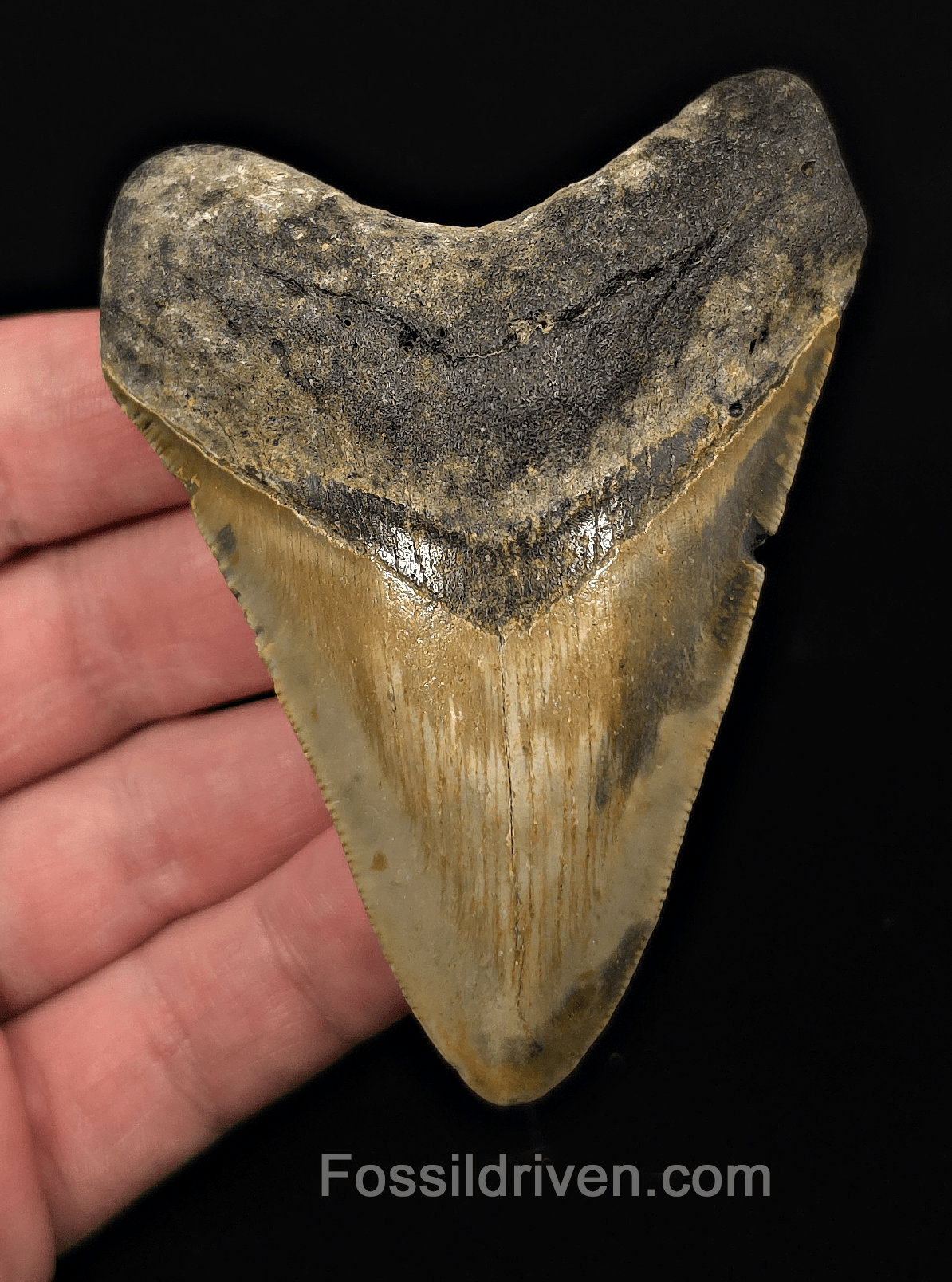
Image credit: fossildriven.com
The First Station: An Ancient Ocean
Look at the Megalodon the molars in West Java, Indonesia. Around 20 million years ago, regions that are still dry today were linked to warm marine environments. Megalodons, along with other marine animals lived in these prehistoric seas, together with Megalodons.
Megalodon as modern sharks are still producing teeth and then loses them. Some of the teeth subsequently settled into marine sediments. When the conditions were right, burial protected them so long that fossilization could take place.
Then geology took over
The next chapter moved incredibly slowly. Sediments formed. Minerals were interacted with buried matter. Geological forces altered landscapes and environments that had once was underwater were transformed into the present-day landscape. This is why people find that fossil megalodons come in different hues.
Indonesian specimens discovered in the West Java’s Miocene Bentang Formation are often yellow, golden, brown blue, red or black. Some even display several shades on a single tooth. The surrounding minerals can affect the appearance of fossils after it has been dug up for a long time. Nature is unable to reproduce the effects in massive quantities. Each fossil tells their own geological history.
Discovery Begins Another Chapter
Then, a fossil which has been hidden for millions of years is recovered. Documentation and identification are now crucial.
When collectors browse authentic megalodon teeth for sale, they aren’t only evaluating appearance. That’s why they need to be aware of geological preservation, age, locality and repairs.
Natural wear doesn’t take away the fossil’s history. It’s possible that the worn tip or an imperfect root, as well as an incomplete serration, are all part of the fossil’s history. What is important is that it represents the condition of the specimen in an accurate manner.
Fossil Driven’s expertise in fossil identification spans more than 13 years. We work with well-established fossil hunters and suppliers. The fossils are examined and described, including relevant information when possible.
The Fossil will reach out to touch someone’s hands.
People buy real Fossils to satisfy a variety. Some build carefully categorized collections. Others are looking for a singular dramatic conversation piece. Children who are fascinated by fossils from the past could receive a first genuine fossil that starts an ongoing interest in paleontology.
Megalodon teeth are not the only entry point into this world. Dinosaur tooth, mosasaur, trilobites and ammonites as along with mammoth, ammonite and amber material are preserved in diverse chapters in the history of Earth.
The greatest thing about knowing that this is authentic
Replicas can replicate the shape and general appearance of a tooth from the past. It is not able to recreate its history. An authentic Megalodon tooth was part of an animal from the past, found an environment totally different from the modern world It was able to withstand geological change, it was buried for a number of hundreds of years and was later discovered.
This is why authenticity is important. When you hold a genuine fossil it is a thing that has successfully made an almost unimaginable trip across time. The display case is the latest stop on its journey.